

Get a Free Quote
Tell us what you need and our CleanMitra team will contact you.
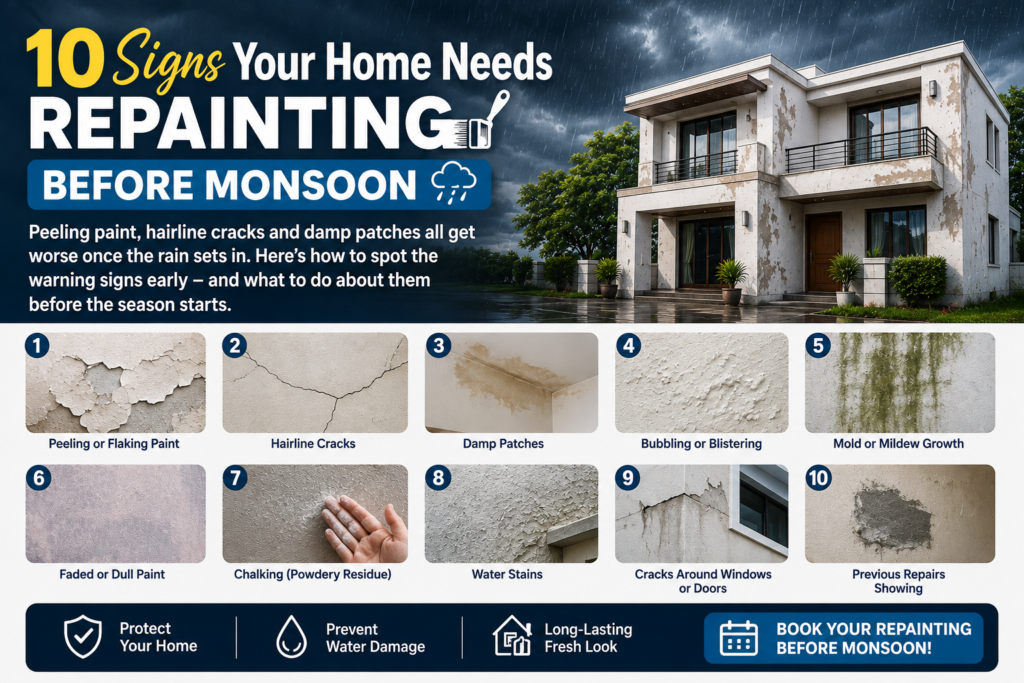
10 Signs Your Home Needs Repainting Before Monsoon
Peeling paint, hairline cracks and damp patches all get worse once the rain sets in. Here’s how to spot the warning signs early — and what to do about them before the season starts.
If you’ve noticed peeling paint on your balcony, a hairline crack near the window, or a faint damp patch on the bedroom wall, monsoon is about to make it worse. Rain doesn’t just wash your walls — it seeps into every weak spot summer heat has already loosened, turning small imperfections into bigger repairs once the season passes.
That’s why house painting before monsoon isn’t just about fresh colour; it’s about protecting your walls before water finds its way in. Below are 10 clear signs it’s time to repaint, what each one actually means, and how to prepare your home before the rains arrive.
Repaint before monsoon if you spot peeling paint, cracks, damp patches, white powdery deposits, mold/algae marks, or a generally dull, uneven exterior. Painting in the dry season allows proper surface prep and gives exterior walls real protection before heavy rain sets in.
01The 10 Warning Signs
Peeling or Flaking Paint
Paint loses its bond with the wall underneath — often from trapped moisture, poor-quality paint, or a coat applied without proper preparation. Once monsoon humidity sets in, loose paint absorbs moisture faster and peels further, exposing bare wall to direct rain. Painting straight over it won’t work; the loose paint needs to be scraped back to a stable surface, cleaned, and primed first.
Cracks Appearing on Walls
Fine hairline cracks are normal as walls expand and contract with temperature, and are usually handled during routine surface prep. Larger, deeper, or recurring cracks are different — they can point to structural movement and deserve a professional look before you paint over them, since paint alone won’t fix what’s underneath.
Damp or Moisture-Damaged Walls
Damp patches, discoloured spots, or a musty smell mean moisture is already inside the wall, not just on the surface. Painting over an active damp patch rarely lasts — the trapped moisture pushes outward and blisters the new coat. Find and fix the source first: a leak, poor drainage, or seepage from next door.
Faded Exterior Paint
Direct sun, heat and UV exposure gradually break down paint pigment, leaving walls chalky, dull, or unevenly faded. This weakens the paint film’s protective quality. Since exteriors take the full brunt of rain, dust and sun, they generally do better with exterior-grade paints built for that exposure.
Bubbling or Blistering Paint
Small bubbles or blisters usually mean moisture or trapped air is pushing against the paint film from underneath, or the paint didn’t adhere properly when applied. It’s an adhesion problem a fresh top coat won’t solve — the patch needs scraping, checking, and proper prep before repainting.
White Powdery Deposits (Efflorescence)
A white, chalky, salt-like deposit on exterior or ground-floor walls is called efflorescence — moisture moving through masonry carries dissolved salts to the surface, which are left behind as the water evaporates. It’s a sign of moisture movement inside the wall, so painting over it without fixing the source usually traps the problem.
Mold, Algae or Black/Green Marks
Dark green, black or greenish-grey patches — especially in shaded, damp or poorly ventilated spots — usually mean mold or algae encouraged by persistent moisture. Painting straight over these marks rarely lasts, since growth can continue underneath. Proper cleaning and preparation matters before any repainting here.
Damaged Exterior Surface
Surface roughness, minor pitting, or eroded texture from years of sun and rain reduce a wall’s ability to resist water once heavy monsoon rain sets in. Addressing this beforehand — with appropriate repair and a suitable protective coating — gives exterior walls a better chance of holding up through the season.
Old Paint That Hasn’t Been Maintained
Age alone doesn’t decide whether a wall needs repainting — visible condition does. Chalking when touched, uneven sheen, or hairline cracking spread across the surface are stronger indicators. Inspecting once or twice a year, especially before monsoon, helps you plan on your own schedule rather than reacting after damage.
Your Home Looks Dull or Uneven
Sometimes there’s no single dramatic problem — just faded colours in patches, old touch-ups, and slightly different shades that add up to a home that looks neglected. Repainting refreshes the look and gives you a natural opportunity to fix the smaller surface issues while painters are already on site.
02Why Paint Before the Monsoon
Timing matters as much as the paint itself. Here’s what painting early gets you:
Better prep conditions
Scraping, sanding and filling all work best in dry weather, not during or right after heavy rain.
Catch problems early
Cracks, peeling and damp patches are easier to treat before rain has a chance to worsen them.
Exterior protection
A well-prepared, properly coated exterior is better positioned to handle sustained rain exposure.
Refreshed appearance
Your home looks its best heading into the season when it’s seen from indoors the most.
Predictable scheduling
Dry-season work is easier to plan and complete without weather-driven delays.
Note: paint alone isn’t a substitute for waterproofing where a genuine leak or structural moisture issue exists — active water-entry points need to be fixed separately.
03Before-Painting Checklist
Walk around your home with this list before calling a contractor — click each item as you go.
04How to Prepare Your House for Repainting
The exact process depends on your wall’s current condition, but a typical professional job follows these steps:
Inspection
Assessing walls for cracks, dampness, peeling and overall condition.
Surface preparation
Scraping loose or flaking paint and sanding uneven areas.
Cleaning
Removing dust, dirt, mold or algae from the surface.
Repairing damaged areas
Filling cracks and fixing minor surface damage.
Putty application
Creating a smooth, even base where appropriate.
Primer
Helping the paint adhere properly and last longer.
Paint application
Usually two or more coats, depending on the paint type.
Final inspection
Checking finish, coverage and touch-ups before completion.
05How Much Does House Painting Cost Before Monsoon?
Pricing varies with area, paint type, number of coats, surface condition, putty and primer needs, labour, and whether it’s interior or exterior work.
| Painting Type | Approx. Cost |
|---|---|
| Basic Distemper | ₹10–₹15 / sq. ft. |
| Standard Emulsion | ₹15–₹30 / sq. ft. |
| Premium Emulsion | ₹30–₹50 / sq. ft. |
| Luxury / Designer | ₹60–₹150+ / sq. ft. |
| Exterior Painting | ₹18–₹60 / sq. ft. |
These are indicative ranges, not fixed quotations. Actual pricing depends on the property and required work.
06House Painting Services in Chandigarh, Mohali & Punjab
Homeowners across the region face similar monsoon-season concerns — older exterior paint, damp patches from last year’s rain, or homes overdue for a repaint.
Whichever service you choose, it’s worth comparing surface preparation, paint quality, scope of work, labour, any warranty or guarantee terms offered, and the final written quotation — so there are no surprises once work begins.
07Why Consider CleanMitra?
CleanMitra offers professional consultation and painting estimates for homeowners getting ready for monsoon — assessing surface condition, understanding your interior or exterior requirements, and helping plan the right preparation and paint choice for your walls. Service is currently available in selected Punjab locations.
Get your home monsoon-ready
Spotted peeling paint, cracks, damp patches or fading? Get your home inspected and request a painting estimate from CleanMitra before the rains arrive.
08Frequently Asked Questions
Yes — dry weather allows for proper surface preparation, cracks and damp patches can be treated early, and exterior walls get a protective coat before facing sustained rain.
No — the loose paint needs to be scraped, the surface cleaned and primed, and only then repainted, otherwise the new coat peels along with the old one.
Yes. Painting over an active damp patch without fixing the moisture source usually leads to the new paint blistering or peeling again fairly quickly.
It depends on house size, surface condition and weather, but exterior painting typically takes a few days to about a week, including prep and drying time between coats.
There’s no fixed rule — it depends more on visible wear than age. Inspect walls regularly and repaint when signs of wear appear, rather than going purely by a timeline.
Exterior-grade or weather-resistant paints generally do better, since they’re designed to handle sun, rain and temperature swings that standard interior paint isn’t built for.
Roughly ₹10/sq. ft. for basic distemper up to ₹150+/sq. ft. for premium or designer finishes. A proper estimate for your specific home is the best way to know actual costs.
Yes — especially larger or recurring cracks. Painting over an unrepaired crack doesn’t fix the underlying issue, and the crack will likely reappear.
The bottom line
Most monsoon damage traces back to a sign that was already visible weeks or months earlier. Walking your home against the checklist above, and getting a professional opinion on anything beyond surface-level paint, gives you the best shot at a dry, undamaged rainy season.